

Table of Contents
ToggleAdd Your Heading Text Here
Introduction to The Pot Maker
The Pot Maker is an inspiring story from the NCERT Kaveri Class 9 book. The chapter beautifully presents the themes of tradition, hard work, determination, and cultural heritage. The story revolves around a young girl named Sentila who dreams of becoming a skilled pot maker like her mother, Arenla.
The chapter teaches students that success comes through patience, dedication, and perseverance. It also highlights the importance of preserving traditional skills and cultural identity.
About the Author – Temsula Ao
Temsula Ao was a famous Indian poet, short story writer, ethnographer, and scholar from Nagaland. She is widely known for writing about tribal life, traditions, and the culture of Northeast India. Her stories often focus on human emotions, identity, heritage, and social values. Temsula Ao’s writing style is simple yet deeply emotional, making her works meaningful and relatable for readers. Through The Pot Maker, she highlights the importance of preserving traditional skills and respecting cultural heritage passed down through generations.
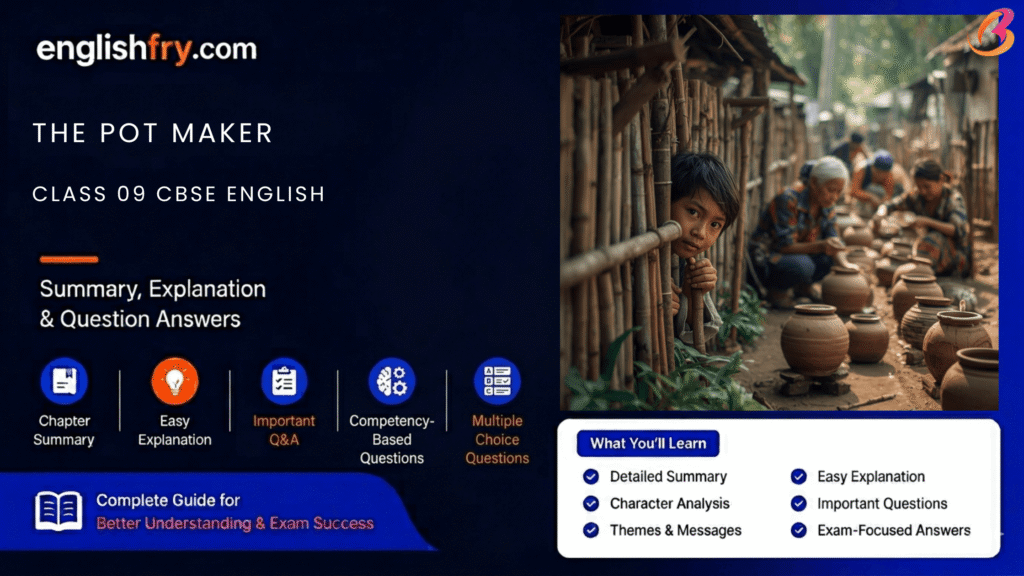
The story begins with a young girl named Sentila, who dreams of becoming a pot maker like her mother Arenla and grandmother. Since childhood, she loved watching expert potters shape clay into beautiful pots. The rhythmic sound of the spatula on clay fascinated her deeply.
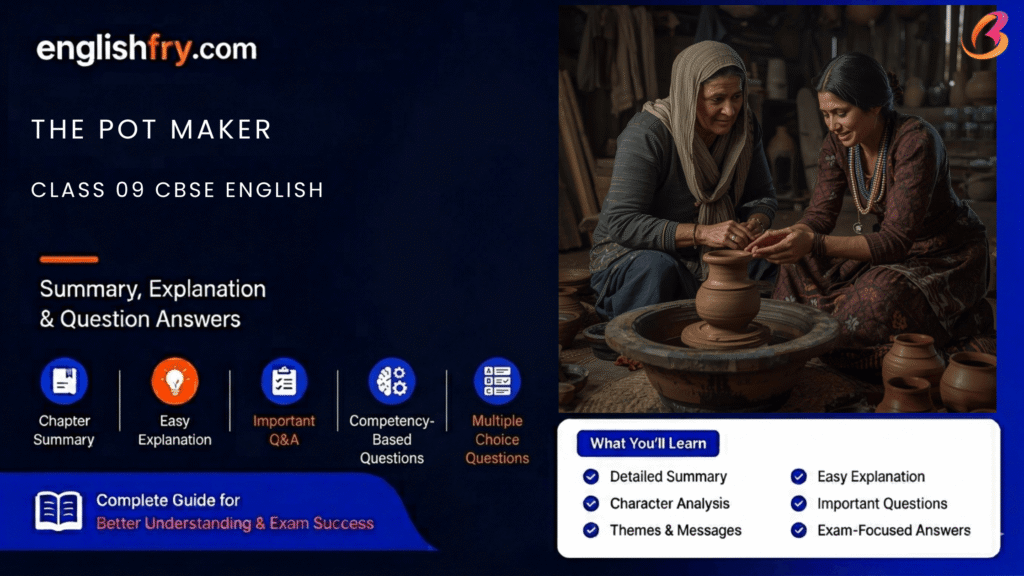
However, Arenla did not want her daughter to learn pot making because the work was extremely difficult and poorly paid. She believed weaving was a better profession because it was easier, cleaner, and more profitable. Pot making required collecting heavy clay from a distant riverbank, pounding the clay, shaping pots carefully, drying them in the sun, and firing them perfectly in a kiln. Even after such hard labour, the income was very little.
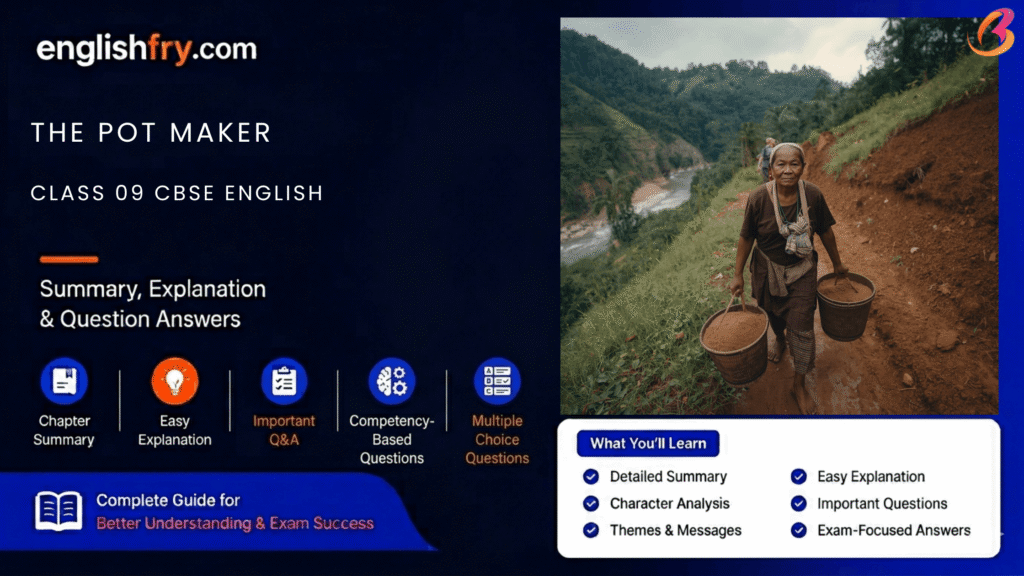
Despite her mother’s opposition, Sentila secretly visited local potters and carefully observed their techniques. Soon, villagers began gossiping about Arenla refusing to teach her daughter the traditional family craft. The village council called Sentila’s father, Mesoba, and reminded him that traditional skills belonged to the community and must be passed down to future generations.

Finally, Arenla agreed to teach Sentila. She showed her how to collect clay, soften it, and prepare it for shaping. Although Sentila learned quickly, she struggled to shape proper pots even after practising for almost a year. She became frustrated and ashamed of her repeated failures.
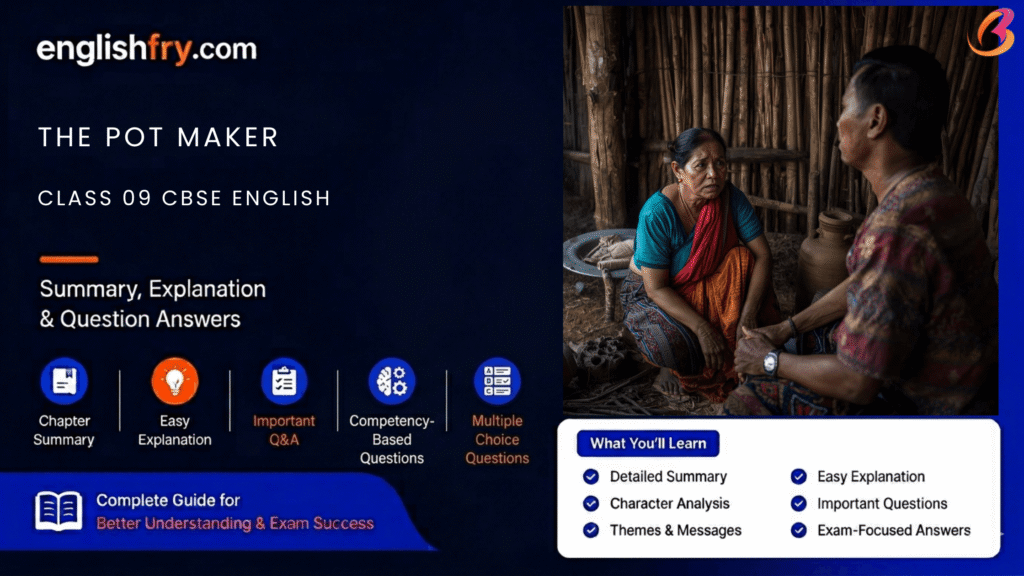
Later, Sentila stayed in a girls’ dormitory supervised by a kind widow named Onula. One evening, Onula noticed Sentila trying unsuccessfully to make a pot. She encouraged her gently and taught her the correct technique. Under Onula’s guidance, Sentila successfully made a beautiful pot for the first time.

After this, Sentila carefully observed every movement of her mother’s hands during pot making. One day, Arenla complained of headache and backache and left Sentila alone in the work shed. Motivated and confident, Sentila suddenly found herself making pots skillfully and quickly, almost matching her mother’s speed and perfection.
However, when she went inside the house after finishing her work, she discovered that her mother had died. Overcome with grief, Sentila cried and begged for forgiveness because she felt guilty that she had finally mastered the skill only at the moment of her mother’s death.

Later, Onula entered the work shed and saw two rows of pots standing side by side. She realised that both mother and daughter had created them together with equal perfection. At that moment, she understood that a new pot maker had been born.
The story conveys a powerful message about perseverance, tradition, cultural heritage, and the passing of skills from one generation to another.
Lorem ipsum dolor sit amet, consectetur adipiscing elit. Ut elit tellus, luctus nec ullamcorper mattis, pulvinar dapibus leo.

हिंदी सारांश (Hindi Summary)
द पॉट मेकर कक्षा 9 सारांश
यह कहानी सेंटिला नाम की एक लड़की के बारे में है, जो अपनी माँ एरेनला और दादी की तरह एक कुशल कुम्हार बनना चाहती थी। उसे बचपन से ही मिट्टी के बर्तन बनाना बहुत पसंद था। लेकिन उसकी माँ चाहती थी कि वह बुनाई सीखे क्योंकि बर्तन बनाना बहुत कठिन और कम कमाई वाला काम था।
सेंटिला छुपकर गाँव के कुम्हारों को काम करते हुए देखती थी। बाद में गाँव के बुजुर्गों ने उसकी माँ को समझाया कि पारंपरिक कला को अगली पीढ़ी तक पहुँचाना जरूरी है। तब एरेनला ने सेंटिला को बर्तन बनाना सिखाना शुरू किया।
हालाँकि सेंटिला को शुरुआत में बहुत कठिनाई हुई, लेकिन उसने हार नहीं मानी। बाद में ओनुला नाम की एक महिला ने उसकी मदद की और उसे आत्मविश्वास दिया। धीरे-धीरे सेंटिला ने सुंदर बर्तन बनाना सीख लिया।
एक दिन उसकी माँ की मृत्यु हो गई, लेकिन उसी दिन सेंटिला एक कुशल कुम्हार बन चुकी थी। कहानी हमें मेहनत, धैर्य, परंपरा और संस्कृति के महत्व का संदेश देती है।
অসমীয়া সাৰাংশ (Assamese Summary)
দ্য পট মেকাৰ ক্লাছ ৯ সাৰাংশ
এই কাহিনীখন ছেন্টিলা নামৰ এজনী ছোৱালীৰ বিষয়ে, যিয়ে নিজৰ মাক আৰেনলা আৰু আইতাকৰ দৰে এজনী দক্ষ মাটিৰ হাঁহি-পাতিল বনোৱা শিল্পী হ’ব বিচাৰিছিল। সৰুবেলাৰ পৰাই তাই মাটিৰ পাতিল বনোৱা কাম ভাল পাইছিল।
কিন্তু আৰেনলাই বিচাৰিছিল যে ছেন্টিলাই বয়ন শিকক, কিয়নো হাঁহি-পাতিল বনোৱা কাম অতি কষ্টকৰ আৰু কম আয়জনক আছিল। তথাপিও ছেন্টিলাই গোপনে কুমাৰসকলক লক্ষ্য কৰি শিকিবলৈ চেষ্টা কৰিছিল।
পিছত গাঁওৰ মানুহে আৰেনলাক বুজাই দিলে যে ঐতিহ্যবাহী কলা আগন্তুক প্ৰজন্মলৈ আগবঢ়োৱাটো অতি প্ৰয়োজনীয়। তাৰ পিছত আৰেনলাই ছেন্টিলাক এই শিল্প শিকাবলৈ আৰম্ভ কৰে।
আৰম্ভণিতে বহু অসুবিধা হ’লেও ছেন্টিলাই হাৰ নামানিলে। অনুলা নামৰ এগৰাকী মহিলাই তাইক উৎসাহ দিলে আৰু সহায় কৰিলে। ধীৰে ধীৰে তাই এজনী দক্ষ কুমাৰ হৈ উঠিল।
শেষত আৰেনলাৰ মৃত্যু হয়, কিন্তু সেই দিনাই ছেন্টিলা এজনী নতুন পট মেকাৰ হিচাপে জন্ম লয়। কাহিনীটোৱে অধ্যৱসায়, পৰম্পৰা আৰু সাংস্কৃতিক ঐতিহ্যৰ গুৰুত্ব বুজাই দিয়ে।
Word Meanings
| Word | Meaning |
|---|---|
| Fascination | Strong interest |
| Tedious | Boring and tiring |
| Malleable | Easily shaped |
| Dexterity | Skillfulness |
| Frustration | Feeling of failure |
| Reluctantly | Unwillingly |
| Symmetry | Balanced arrangement |
| Perseverance | Continuous effort |
| Heritage | Cultural tradition |
| Oblige | Duty-bound |
Character Sketches
Sentila – Character Sketch
Sentila is the central character of the story The Pot Maker. She is a determined, hardworking, and passionate girl who dreams of becoming a skilled pot maker like her mother and grandmother. From childhood, she is deeply fascinated by the art of pottery and secretly visits expert potters to observe their work. Even though her mother opposes her interest and wants her to learn weaving instead, Sentila never gives up on her dream.
She is highly patient and persevering. Despite failing repeatedly while learning to shape pots, she continues practising with dedication. Her eagerness to learn and strong determination finally help her become a successful pot maker. Sentila also shows humility because she carefully observes and learns from others, especially Onula and her mother.
Through Sentila’s character, the author highlights the importance of perseverance, dedication, and passion in achieving one’s goals. She represents hope, courage, and the spirit of hard work.
Arenla – Character Sketch
Arenla is Sentila’s mother and an expert pot maker. She is a hardworking, skilled, and responsible woman who has spent many years making pots to support her family. However, due to the physical hardship and poor financial rewards of pot making, she does not want her daughter to suffer in the same way. Therefore, she encourages Sentila to learn weaving, which she believes is easier and more profitable.
Although Arenla appears strict and discouraging at first, she is actually a caring and protective mother. She wants a better future for her daughter. Later, she agrees to teach Sentila the traditional craft and silently guides her with patience. Her actions reveal her deep understanding of tradition and responsibility.
Arenla symbolizes sacrifice, cultural heritage, and maternal care. Through her character, the story shows the struggles faced by traditional artisans and the importance of preserving cultural skills for future generations.
Onula – Character Sketch
Onula is a kind-hearted, wise, and supportive woman in the story. She supervises the girls’ dormitory where Sentila stays for some time. Unlike others, Onula understands Sentila’s emotional struggles and genuinely wishes to help her achieve her dream of becoming a pot maker.
When she notices Sentila failing repeatedly and losing confidence, Onula encourages her with patience and compassion. She teaches her the correct method of shaping pots and motivates her to believe in herself. Her guidance becomes the turning point in Sentila’s life because it helps the girl gain confidence and improve her skills.
Onula is understanding and encouraging. She represents mentorship, emotional support, and wisdom. Through her character, the author shows how guidance and encouragement from a caring person can completely transform someone’s life and help them discover their hidden potential.
Textual Questions and Answers
1. Describe the process of pot making followed by expert pot makers.
Expert pot makers first collect grey and red clay from the riverbank. The clay is soaked in water and pounded inside bamboo cylinders until it becomes soft and smooth. Then the clay is shaped carefully into pots using hands and a spatula. The pots are dried in the sun and later fired in a kiln carefully. Proper firing is very important because overfiring or underfiring can destroy the entire batch.
2. What warning was given to Mesoba by the village council?
The village council warned Mesoba that traditional skills like pot making belonged to the community and should not disappear. They reminded him that Arenla had the responsibility to teach Sentila the craft. The elders believed that such cultural skills must be passed from one generation to another to preserve the traditions and history of the people.
3. How did Sentila feel after failing at pot making for one year?
Sentila felt ashamed, frustrated, and disappointed because she could not shape pots properly even after practising for almost a year. She felt discouraged seeing her repeated failures. However, despite these difficulties, she did not lose hope and continued trying hard to achieve her dream of becoming a skilled pot maker.
4. What is the significance of the line “A new pot maker was born”?
The line symbolizes Sentila’s transformation into a skilled pot maker. It shows that she had finally mastered the traditional craft after years of hard work and determination. The sentence also suggests the continuation of cultural heritage from one generation to another, ensuring that the ancient tradition of pot making survives.
Competency-Based Questions (CBSE Pattern)
1. Why is perseverance important in achieving dreams?
Perseverance is important because success cannot be achieved without continuous effort and patience. In the story, Sentila failed many times while learning pot making, but she never gave up. Her determination and regular practice finally helped her become a skilled pot maker. The chapter teaches students that difficulties should motivate people instead of discouraging them.
2. How does the story highlight the importance of cultural heritage?
The story shows that traditional skills are valuable parts of a community’s identity and history. The village elders believe that pot making should be preserved and passed on to future generations. Through Sentila’s journey, the author explains that protecting traditional arts and crafts is necessary for preserving cultural heritage and social values.
3. How did Onula’s support change Sentila’s life?
Onula encouraged Sentila when she was feeling frustrated and hopeless. She taught her the correct technique and helped her gain confidence. Her emotional support motivated Sentila to continue practising without fear. Without Onula’s guidance, Sentila might have lost confidence and given up her dream of becoming a pot maker.
4. Why did Arenla prefer weaving over pot making?
Arenla believed weaving was a better profession because it was easier, cleaner, and more profitable than pot making. Pot making involved heavy physical labour and long hours of hard work, yet the income was very small. She wanted her daughter to live a more comfortable life and avoid the struggles she herself had faced.
Exam Tips for Students
- Learn the themes properly.
- Remember the role of Sentila, Arenla, and Onula.
- Practice competency-based answers in 60+ words.
- Use keywords like perseverance, heritage, tradition, and determination.
- Revise the process of pot making carefully.
Conclusion
The Pot Maker Class 9 Summary teaches students valuable lessons about perseverance, cultural heritage, and hard work. Sentila’s journey inspires readers to follow their dreams with dedication and patience. The story beautifully shows that traditions survive only when knowledge is passed from one generation to another. It is not just a story about pottery but also about identity, learning, and emotional strength.
Suggested Internal Link: Read also: The Shehnai of Bismillah Khan Summary and Notes
Suggested External Reference: NCERT Official Website

Founder of Englishfry.com, a captivating and knowledge-driven blog & Founder of Android app/website Studyfunnel.com, an online Mock Test Series Portal. With a wealth of experience spanning over 16+ years, he has excelled as an Ex-Asst.Professor, Teacher, Amazon published author, Website Developer, Graphic Designer,Blogger,Poet, and Creative academic content writer publisher of 4 academic books available Online on Amazon & Flipkart. His tryst in Literature helped him realize his love for writing and telling stories. A tech-savvy language nerd by day and, a passionate writer by night, he now translates his experiences into tales of wisdom served with a side of humor.His widely recognized profound insights ,captivating writing style of weaving words make him contribute to prestigious publications and a sought-after authority in the field that transport readers to extraordinary worlds.