
Table of Contents
ToggleIntroduction
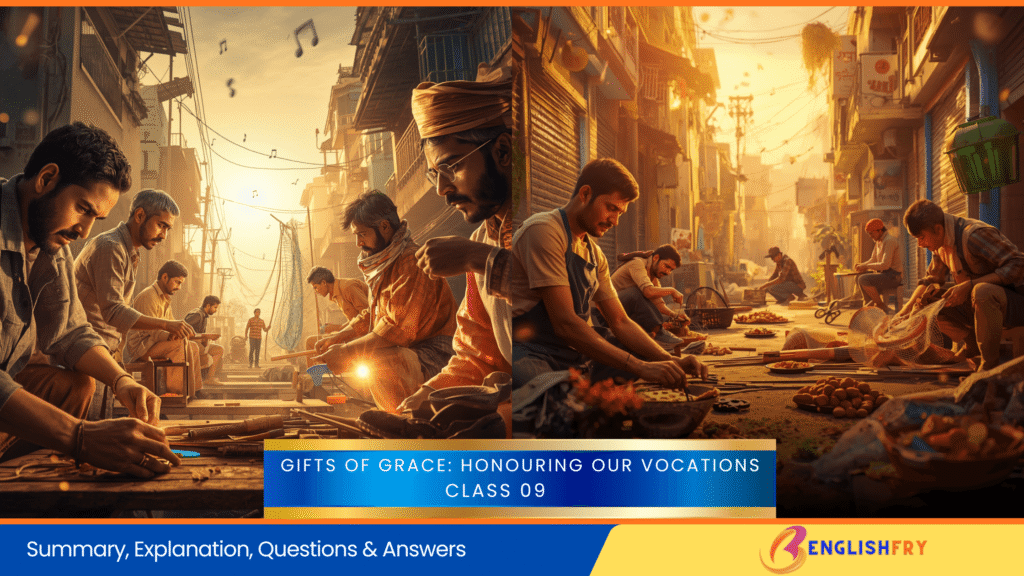
The poem “Gifts of Grace: Honouring Our Vocations” beautifully celebrates the dignity of labour and the importance of every profession in society. The poet describes different workers such as carpenters, electricians, shoemakers, cooks, boatmen, designers, and masons. Through musical and colourful imagery, the poem shows how each person contributes to society through dedication and skill.
This Gifts of Grace: Honouring Our Vocations Summary is specially designed for CBSE and State Board students. The explanations, textual questions, competency-based questions, and important answers are written in simple language so that students can easily understand, memorise, and score high marks in exams.
About the Poem
“Gifts of Grace: Honouring Our Vocations” is an inspiring poem that praises hardworking people from different professions. The poet explains that every occupation has value and contributes to society. The poem highlights unity, dignity of labour, self-respect, and pride in one’s work.
Gifts of Grace: Honouring Our Vocations Summary
The poem begins with the poet saying that Bharat (India) is celebrating many different vocations or professions. The poet hears the joyful voices of workers from different fields performing their duties with dedication and pride.
The craftsperson creates colourful artistic items using great skill and creativity. The artisans play musical instruments and fill the streets with emotions and dreams through music. The carpenters work carefully with wood and create useful things with perfect precision.
The electricians are shown preparing for work while humming happily. Their work brightens homes and improves people’s lives. The boatmen collect their fishing nets and sail into the sea while singing songs. After returning home, they share stories about their experiences at sea.
The shoemakers proudly make strong and comfortable shoes for people who walk, dance, run, and work every day. The cook prepares delicious food, while designers and masons continue creating useful and beautiful things for society.
Finally, the poet says that every worker’s profession becomes their identity. The poem celebrates the hard work, dedication, and uniqueness of all occupations. It teaches readers to respect every profession equally.
Central Idea of the Poem
The central idea of the poem is that every profession deserves respect and honour. Each worker contributes to society through hard work and dedication. The poet reminds us that no work is small or unimportant.
Theme of the Poem
1. Dignity of Labour
The poem teaches that all professions are valuable and deserve equal respect.
2. Identity Through Work
A person’s vocation becomes a part of their identity and self-respect.
3. Unity in Diversity
Different workers perform different duties, but together they help society function smoothly.
4. Celebration of Hard Work
The poem celebrates dedication, creativity, and sincerity in every profession.
Stanza-wise Explanation
Stanza 1 Explanation
The poet hears Bharat celebrating different professions. Craftspersons create colourful works of art, while artisans express emotions through music and creativity.
Stanza 2 Explanation
Carpenters create wooden objects carefully and accurately. Electricians work with wires and cables to bring light into people’s lives.
Stanza 3 Explanation
Boatmen sail into the sea while singing happily. After returning, they share stories of their adventures and experiences.
Stanza 4 Explanation
Shoemakers proudly make quality shoes for people’s daily activities. Cooks, designers, and masons also perform their work with dedication and pride.
Stanza 5 Explanation
The poet concludes that every worker’s profession becomes their identity. India celebrates all these varied voices and occupations.
Word Meanings
| Word | Meaning |
|---|---|
| Vocation | Profession or occupation |
| Artisans | Skilled workers |
| Myriad | Numerous |
| Precision | Accuracy |
| Humming | Singing softly |
| Affirming | Declaring confidently |
| Rhythm | Flow or pattern |
| Identity | Individual character |
| Mason | Person who builds with stone or bricks |
| Craftsperson | Skilled creator of handmade items |
Poetic Devices
Imagery
The poet creates beautiful pictures of workers performing their duties.
Alliteration
Repetition of similar consonant sounds adds musical quality.
Symbolism
Different professions symbolise unity and contribution to society.
Personification
Professions are presented as if they are celebrating joyfully.

Gifts of Grace: Honouring Our Vocations Summary (हिंदी अनुवाद)
कविता की शुरुआत कवि के इस कथन से होती है कि भारत अनेक प्रकार के व्यवसायों और पेशों का उत्सव मना रहा है। कवि अलग-अलग क्षेत्रों के कामगारों की प्रसन्न आवाज़ें सुनता है, जो अपने कार्य को समर्पण और गर्व के साथ कर रहे हैं।
कारीगर अपनी कला, कौशल और रचनात्मकता से रंग-बिरंगी कलात्मक वस्तुएँ बनाते हैं। कलाकार संगीत वाद्ययंत्र बजाकर सड़कों को भावनाओं और सपनों से भर देते हैं। बढ़ई लकड़ी पर सावधानीपूर्वक काम करते हैं और पूरी सटीकता के साथ उपयोगी वस्तुएँ तैयार करते हैं।
बिजली मिस्त्री खुशी-खुशी गुनगुनाते हुए काम की तैयारी करते दिखाई देते हैं। उनका कार्य घरों को रोशन करता है और लोगों के जीवन को बेहतर बनाता है। नाविक अपने मछली पकड़ने के जाल इकट्ठा करते हैं और गीत गाते हुए समुद्र की ओर निकल जाते हैं। घर लौटने के बाद वे समुद्र के अनुभवों की कहानियाँ सुनाते हैं।
मोची गर्व के साथ मजबूत और आरामदायक जूते बनाते हैं, जिन्हें लोग रोज़ चलने, नृत्य करने, दौड़ने और काम करने के लिए पहनते हैं। रसोइया स्वादिष्ट भोजन बनाता है, जबकि डिज़ाइनर और राजमिस्त्री समाज के लिए सुंदर और उपयोगी चीज़ें बनाते रहते हैं।
अंत में कवि कहता है कि हर कामगार का पेशा उसकी पहचान बन जाता है। यह कविता सभी व्यवसायों की मेहनत, समर्पण और विशेषता का उत्सव मनाती है। यह पाठकों को हर पेशे का समान रूप से सम्मान करना सिखाती है।
Gifts of Grace: Honouring Our Vocations Summary (অসমীয়া অনুবাদ)
কবিতাটোৰ আৰম্ভণিতে কবিয়ে কৈছে যে ভাৰতত বিভিন্ন ধৰণৰ পেচা আৰু জীৱিকাৰ উদযাপন চলি আছে। কবিয়ে বিভিন্ন ক্ষেত্ৰৰ কৰ্মৰত লোকসকলৰ আনন্দময় কণ্ঠ শুনিছে, যিসকলে নিজৰ কাম নিষ্ঠা আৰু গৌৰৱৰ সৈতে কৰি আছে।
শিল্পীসকলে নিজৰ দক্ষতা আৰু সৃজনশীলতাৰে ৰঙীন শিল্পকৰ্ম তৈয়াৰ কৰে। শিল্পীসকলে বাদ্যযন্ত্ৰ বজাই সংগীতৰ মাধ্যমেৰে ৰাস্তা-ঘাট অনুভূতি আৰু সপোনেৰে ভৰাই তোলে। কাঠমিস্ত্ৰীসকলে কাঠৰ ওপৰত অতি সাৱধানে কাম কৰি নিখুঁতভাৱে উপযোগী বস্তু তৈয়াৰ কৰে।
বিদ্যুৎ মিস্ত্ৰীসকল আনন্দেৰে গুণগুণাই কামৰ বাবে সাজু হোৱা দেখা যায়। তেওঁলোকৰ কামে ঘৰবোৰ উজ্বল কৰি তোলে আৰু মানুহৰ জীৱন উন্নত কৰে। নাওৱালাসকলে মাছ ধৰাৰ জাল সংগ্ৰহ কৰি গান গাই গাই সাগৰলৈ যায়। ঘৰলৈ উভতি আহি তেওঁলোকে সাগৰৰ অভিজ্ঞতাৰ কাহিনী কয়।
মুচিসকলে গৌৰৱৰ সৈতে মজবুত আৰু আৰামদায়ক জোতা তৈয়াৰ কৰে, যিবোৰ মানুহে খোজ কঢ়া, নাচা, দৌৰা আৰু দৈনন্দিন কামত ব্যৱহাৰ কৰে। ৰন্ধনকাৰীয়ে সুস্বাদু খাদ্য প্ৰস্তুত কৰে, আনহাতে ডিজাইনাৰ আৰু ৰাজমিস্ত্ৰীসকলে সমাজৰ বাবে উপযোগী আৰু সুন্দৰ বস্তু সৃষ্টি কৰি থাকে।
শেষত কবিয়ে কৈছে যে প্ৰতিজন কৰ্মীৰ পেচাই তেওঁৰ পৰিচয় হৈ পৰে। কবিতাটোৱে সকলো পেচাৰ পৰিশ্ৰম, নিষ্ঠা আৰু বিশেষত্বৰ উদযাপন কৰিছে। এই কবিতাই পাঠকসকলক প্ৰতিটো পেচাক সমান সন্মান কৰিবলৈ শিক্ষা দিয়ে।

Textual Questions and Answers
1. Why does the poet say, “I hear Bharat celebrating, the varied vocations I hear”?
The poet says this because people from different professions are working happily and proudly across the country. Every worker contributes to society in a meaningful way. Their dedication, skill, and hard work create harmony and progress. The poet celebrates India’s cultural richness through the voices of these hardworking people.
2. What does the electrician ‘humming’ while getting ready for work suggest?
The electrician humming while working suggests happiness, confidence, and dedication towards his profession. It shows that he enjoys his work and performs his duty with enthusiasm. His work brings light into people’s homes and improves their lives. The humming creates a cheerful and positive atmosphere in the poem.
3. Explain the significance of the line, “The voice of their vocation is the voice of their identity.”
This line means that a person’s profession reflects their personality, dignity, and identity. The work people do becomes an important part of who they are. Their dedication and skills make them respected members of society. The poet highlights that every occupation has value and deserves equal honour.
4. Do you think the role of all people belonging to different vocations is important in our daily lives?
Yes, every profession is important because society depends on the contribution of different workers. Electricians provide light, cooks prepare food, carpenters build furniture, and shoemakers make shoes. Without their services, daily life would become difficult. The poem teaches us to respect and appreciate all hardworking people equally.
5. Why is the poet celebrating all the vocations in the poem?
The poet celebrates all vocations because every worker contributes something valuable to society. Their work reflects creativity, dedication, and honesty. Whether it is a carpenter, cook, boatman, or mason, each profession helps people live comfortably. The poem promotes respect, equality, and appreciation for all forms of labour.
6. How does the poet use sensory imagery to bring out the beauty of everyday work?
The poet uses sounds, colours, rhythm, and movement to make the professions appear lively and beautiful. Readers can imagine artisans singing, electricians humming, and boatmen sailing joyfully. Such vivid imagery creates a musical and colourful atmosphere that highlights the beauty of ordinary work and hardworking people.
Competency-Based Questions (CBSE Pattern)
1. What message does the poem give about the dignity of labour?
The poem teaches that every profession deserves equal respect and honour. No work is small or inferior because each worker contributes to society in important ways. The poet appreciates the dedication and sincerity of workers from different occupations. The poem encourages students to value hard work and respect all professions equally.
2. How does the poem promote unity in diversity?
The poem describes people from different professions working together harmoniously. Although their jobs are different, all of them contribute to the progress of society. The carpenter, electrician, shoemaker, cook, and boatman represent diversity in occupations. Together, they symbolise unity, cooperation, and mutual dependence in society.
3. Why is identity connected with vocation in the poem?
According to the poet, people’s professions reflect their skills, personality, and contribution to society. Their work gives them dignity and recognition. A carpenter becomes known for craftsmanship, while an electrician becomes recognised for bringing light into homes. Thus, vocation becomes an important part of personal identity and self-respect.
4. What qualities of workers are highlighted in the poem?
The poem highlights qualities such as dedication, skill, creativity, sincerity, discipline, and hard work. Each worker performs duties with pride and responsibility. The poet admires their commitment towards society. These qualities inspire readers to work honestly and respect the efforts of others.
Important Extra Questions and Answers
1. What does the poet mean by “varied voices”?
The phrase “varied voices” refers to people belonging to different professions across India. Each profession has its own importance and contribution to society. The poet symbolically calls their work and dedication their “voices.” Together, these voices create harmony, progress, and cultural richness in the nation.
2. Why are boatmen important in the poem?
Boatmen represent courage, adventure, and hard work. They sail into the sea, collect fish, and support their families through difficult labour. Their songs and stories reflect their experiences and emotions. The poet uses boatmen to highlight the beauty and dignity of traditional occupations.
3. What role do artisans play in society according to the poem?
Artisans preserve culture, creativity, and tradition through their skills and artistic work. Their music, craft, and creativity spread happiness and beauty in society. The poet appreciates their emotional connection with their work and celebrates their contribution to cultural identity.
Moral of the Poem
The poem teaches us to respect all professions equally because every worker contributes to society. Hard work, dedication, and sincerity give dignity and identity to people.
Conclusion
Gifts of Grace: Honouring Our Vocations Summary beautifully explains the value of every profession in society. The poem celebrates hardworking people and teaches students the importance of respect, equality, dedication, and dignity of labour. Through colourful imagery and meaningful messages, the poem inspires readers to appreciate every worker’s contribution to the nation.

Founder of Englishfry.com, a captivating and knowledge-driven blog & Founder of Android app/website Studyfunnel.com, an online Mock Test Series Portal. With a wealth of experience spanning over 20+ years, he has excelled as an Ex-Asst.Professor, Teacher, Amazon published author, Website Developer, Graphic Designer,Blogger,Poet, and Creative academic content writer publisher of 4 academic books available Online on Amazon & Flipkart.Internationally Certified as the World’s Top 100 admired Educator 2021 by theexcelligent.com,National Award recipient-Golden Quill award for Best English educator 2024,Receipent of Indian Literature Award 2026.His tryst in Literature helped him realize his love for writing and telling stories. A tech-savvy language nerd by day and, a passionate writer by night, he now translates his experiences into tales of wisdom served with a side of humor.His widely recognized profound insights ,captivating writing style of weaving words make him contribute to prestigious publications and a sought-after authority in the field that transport readers to extraordinary worlds.