
Table of Contents
Toggle🔄 Step-by-Step Summary: Canvas of Soil (Teacher’s Perspective)
Step 1: The Metaphor of the Earth and the Palette
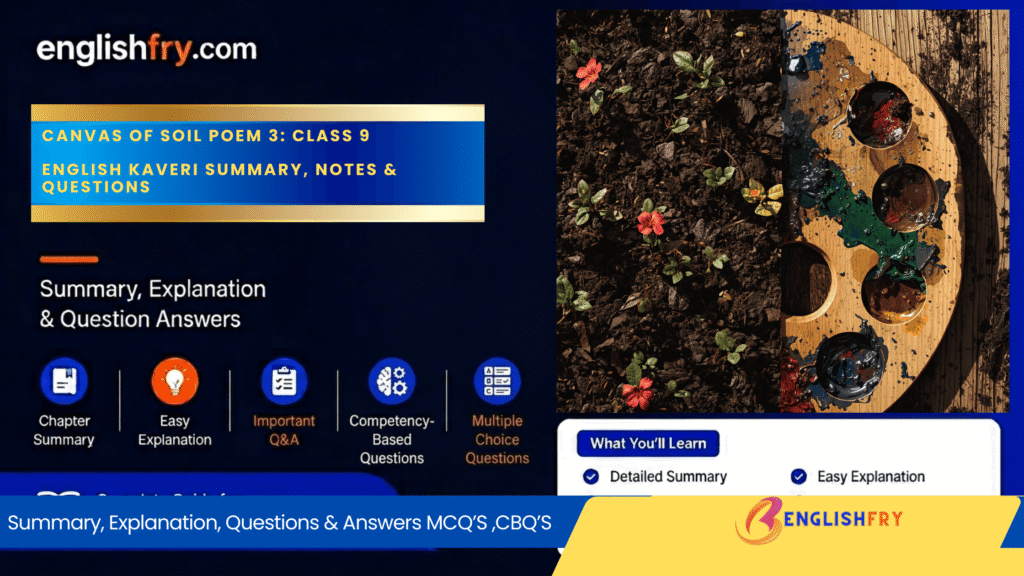
The foundation of canvas of soil poem 3 rests entirely on a brilliant central metaphor: comparing the act of gardening to the fine art of painting. In the opening lines, the poet Maya Anthony describes the ground as a “palette of earth, rich and deep.” Just as a painter uses a wooden palette to mix vibrant colors before touching a canvas, the earth holds all the biological nutrients, possibilities, and potential where the hopes and dreams of a gardener are quietly sown.
Step 2: Seeds as Intentional Brushstrokes
As the poem progresses, the poet beautifully describes planting seeds as “brushstrokes of seeds, planted true.” This means that gardening is not just random, mindless physical labor; it is a highly purposeful, creative act. Each seed is like a careful stroke of an artist’s brush onto a landscape. These “brushstrokes” do not show their true colors immediately. Instead, they lie dormant under the surface, patiently awaiting the arrival of spring’s warm, vibrant hues to bring them to life.
Step 3: The Blooming Artwork of Nature
When spring finally arrives, the true magic of canvas of soil poem 3 is revealed. The garden transforms into a “painted sight,” where freshly opened blossoms look like they are dancing joyfully in the gentle morning light. The poet lists vibrant shades of green, red, and blue, calling the blooming scene “nature’s artwork, ever new.” This stresses that nature is a dynamic living painting that continuously shifts, refreshes, and recreates its beauty every single day.
Step 4: The Merging of Art and Life
In the final lines, every individual plot of land is declared to be a “canvas wide, where art and life coincide.” Through the hard work, patience, and imagination of those who till and nurture the ground, plain dirt is successfully transformed into a masterpiece. The poet ends with the profound thought that under the care of human hands, gardens ultimately become “paintings still”—timeless, living monuments where human creativity and nature work together in perfect harmony.

हिंदी में अध्याय का चरण-दर-चरण सार (Step-by-Step Hindi Summary)
मिट्टी और पैलेट की तुलना: canvas of soil poem 3 में कवयित्री माया एंथनी ने मिट्टी की तुलना एक चित्रकार के रंग मिलाने वाले ‘पैलेट’ (Palette) से की है। जैसे पैलेट पर रंग बिखरे होते हैं, वैसे ही मिट्टी में बागवानों के सपने और उम्मीदें छुपी होती हैं।
बीज और ब्रश के स्ट्रोक: कविता में बोए गए बीजों की तुलना चित्रकार के ब्रश के स्ट्रोक (brushstrokes) से की गई है। इन्हें बहुत ही सावधानी और सच्चाई से मिट्टी में रोपा जाता है, जो वसंत ऋतु (Spring) के आने और अपने असली जीवंत रंगों को प्रकट करने का धैर्यपूर्वक इंतजार करते हैं।
प्रकृति की जीवंत कलाकृति: जब फूल खिलते हैं, तो पूरा बगीचा एक सुंदर पेंटिंग की तरह दिखने लगता है। सुबह की ताज़ी धूप में झूमते हुए हरे, लाल और नीले रंग के फूल मिलकर ‘प्रकृति की एक ऐसी कलाकृति’ (nature’s artwork) बनाते हैं जो रोज़ बदलती और हमेशा नई लगती है।
कला और जीवन का संगम: कविता के अंत में मिट्टी के हर टुकड़े को एक ‘विशाल कैनवास’ (canvas wide) कहा गया है। जब एक इंसान मेहनत से जमीन को जोतता है (till), तो वह एक कलाकार बन जाता है और साधारण सी मिट्टी को एक जीवित, अमर पेंटिंग में बदल देता है।
🌾 অসমীয়াত অধ্যায়টোৰ স্তৰে স্তৰে সাৰাংশ (Step-by-Step Assamese Summary)
মাটি আৰু ৰঙৰ প্লেটৰ তুলনা: মায়া এন্থনীৰ দ্বাৰা ৰচিত canvas of soil poem 3 ত কবিগৰাকীয়ে বাগিচা নিৰ্মাণ কাৰ্যক চিত্ৰকলাৰ সৈতে তুলনা কৰিছে। কবিতাটোৰ আৰম্ভণিতে মাটিক এজন চিত্ৰকাৰৰ ৰং মিশ্ৰণ কৰা কাঠৰ প্লেট অৰ্থাৎ ‘পেলেট’ (palette of earth) ৰ সৈতে তুলনা কৰা হৈছে, য’ত মালীজনৰ সপোনবোৰ সোমাই থাকে।
তুলিকাৰ টান হিচাপে বীজ: মাটিত সিঁচি দিয়া বীজবোৰক চিত্ৰকাৰ এজনৰ তুলিকাৰ টান বা আঁচৰ (brushstrokes) সৈতে তুলনা কৰা হৈছে। এই বীজবোৰ অতি যত্নসহকাৰে সিঁচা হয় আৰু সিহঁতে বসন্ত কালৰ নান্দনিক ৰূপটোলৈ ধৈৰ্য্যৰে অপেক্ষা কৰে।
প্ৰকৃতিৰ সজীৱ শিল্পকৰ্ম: যেতিয়া ফুলবোৰ ফুলি উঠে, তেতিয়া সমগ্ৰ বাগিচাত এক অপূৰ্ব দৃশ্যৰ সৃষ্টি হয়। ৰাতিপুৱাৰ কোমল পোহৰত হালি-জালি থকা সেউজীয়া, ৰঙা আৰু নীলা ৰঙৰ ফুলবোৰে প্ৰকৃতিৰ এক অনন্য সজীৱ শিল্পকৰ্ম (nature’s artwork) গঢ়ি তোলে, যিটো সদায় নতুন আৰু সতেজ যেন লাগে।
শিল্প আৰু জীৱনৰ মিলন: কবিতাটোৰ শেষৰ অংশত মাটিৰ প্ৰতিটো টুকুৰাক এখন ‘বহল কেনভাছ’ (canvas wide) বুলি কোৱা হৈছে, য’ত শিল্প আৰু জীৱন একাকাৰ হৈ পৰে। এজন মালীৰ কঠোৰ পৰিশ্ৰম আৰু যত্নই সাধাৰণ মাটিক এখন চিৰন্তন সজীৱ ছবি বা পেইণ্টিঙলৈ ৰূপান্তৰিত কৰে।

📝 Mark-Wise Exam Question & Answer Blueprint
⏱️ Short Answer Questions (2–3 Marks Each | 40–50 Words)
Q1. Justify the appropriateness of the title ‘Canvas of Soil’.
Ans: The title is highly appropriate because canvas of soil poem 3 revolves completely around the central theme that the earth is an open artistic canvas. The poet effectively visualizes raw soil as a painter’s canvas upon which seeds, seasonal changes, and blooming flowers combine to create a dynamic, living painting.
Q2. Why does the poet use the word ‘hue’ instead of ‘colours’ in the first stanza?
Ans: The poet intentionally uses the word ‘hue’ because it is linguistically more poetic and specifically highlights distinct, vivid artistic shades. It perfectly matches the central painting metaphor of the poem and maintains the lyrical AABB rhyme scheme.
Q3. Explain the literary device used in the line “Blossoms bloom, a painted sight, Dancing in the morning light.”
Ans: Two primary literary devices are used here:
Alliteration: The repetition of the consonant ‘b’ sound in “Blossoms bloom”.
Personification: The flowers are given the human quality of “dancing” in the morning light to create a joyful, lively image.
Q4. Why are seeds compared to “brushstrokes” in the poem?
Ans: Seeds are compared to brushstrokes because their placement by a gardener is intentional, careful, and creative. Just as a painter applies strokes of color to bring a canvas to life over time, a gardener plants seeds to eventually transform plain soil into a beautiful arrangement of flowers.
🧠 Long Answer & Competency-Based Questions (5 Marks Each | 100–120 Words)
Q1. “Each plot, a canvas wide, / Where art and life coincide.” Analyze these lines from ‘Canvas of Soil Poem 3’ to explain the connection between human effort, nature, and art.
Ans: In canvas of soil poem 3, Maya Anthony argues that art is not something confined strictly to galleries, museums, or paper. Instead, true art exists in everyday acts of creation like gardening.
The lines emphasize that a plain plot of land acts as a blank canvas where biological life and human artistic imagination meet. Nature provides raw elements like rich soil, daylight, and seeds, but it requires the patient, dedicated hands of a human gardener to till, organize, and care for it. When human labor and nature work together, the ordinary earth undergoes a massive transformation. The resulting garden is a living masterpiece that continuously grows and changes, proving that human effort can beautifully shape and elevate the natural world into a timeless work of art.
Q2. Identify and detail the structural poetic devices used by Maya Anthony to establish the artistic mood of the poem.
Ans: To weave the theme of painting seamlessly into the text, the poet relies on a very specific set of structural and literary tools.
┌─────────────────────────────────────────────────────────────────┐
│             POETIC ARCHITECTURE IN CANVAS OF SOIL               │
└────────────────────────────────┬────────────────────────────────┘
                                 │
         ┌───────────────────────┴───────────────────────┐
         ▼                                               ▼
【 EXTENDED METAPHOR 】                        【 RHYME & IMAGERY 】
Soil = Palette | Seeds = Brushstrokes          AABB Rhyme Scheme creates a musical flow,
Plot = Canvas  | Garden = Painting            backed by vivid visual color descriptions.
The entire backbone of the poem relies on an extended metaphor that directly links gardening tools to art tools: the earth is a palette, seeds are brushstrokes, a plot is a canvas, and the garden is a painting. This is supported by deep visual imagery, using specific references to colors like red, green, and blue, alongside terms like “morning light” and “painted sight” to build a clear picture in the reader’s mind. Finally, the poem utilizes a strict AABB rhyme scheme (deep/seep, true/hue, sight/light) across all stanzas. This rhythmic layout creates a musical, song-like flow that mirrors the cheerful, appreciative, and wonder-filled mood of the speaker.

Founder of Englishfry.com, a captivating and knowledge-driven blog & Founder of Android app/website Studyfunnel.com, an online Mock Test Series Portal. With a wealth of experience spanning over 20+ years, he has excelled as an Ex-Asst.Professor, Teacher, Amazon published author, Website Developer, Graphic Designer,Blogger,Poet, and Creative academic content writer publisher of 4 academic books available Online on Amazon & Flipkart.Internationally Certified as the World’s Top 100 admired Educator 2021 by theexcelligent.com,National Award recipient-Golden Quill award for Best English educator 2024,Receipent of Indian Literature Award 2026.His tryst in Literature helped him realize his love for writing and telling stories. A tech-savvy language nerd by day and, a passionate writer by night, he now translates his experiences into tales of wisdom served with a side of humor.His widely recognized profound insights ,captivating writing style of weaving words make him contribute to prestigious publications and a sought-after authority in the field that transport readers to extraordinary worlds.